What Is TATORU?

I want to root Brazilian Jiu-Jitsu in Kumamoto and share its appeal with as many people as I can. That's why I, Yosuke Takagame, finally opened a permanent dojo here, TATORU. I love jiu-jitsu, and when I ask myself why, I can't stop coming up with reasons.
When you hear "martial arts," most people probably think it's something you do to get strong. Of course, plenty of people train for exactly that. But fans of Brazilian Jiu-Jitsu don't keep going just to get stronger. That's what I want to get across in this piece.
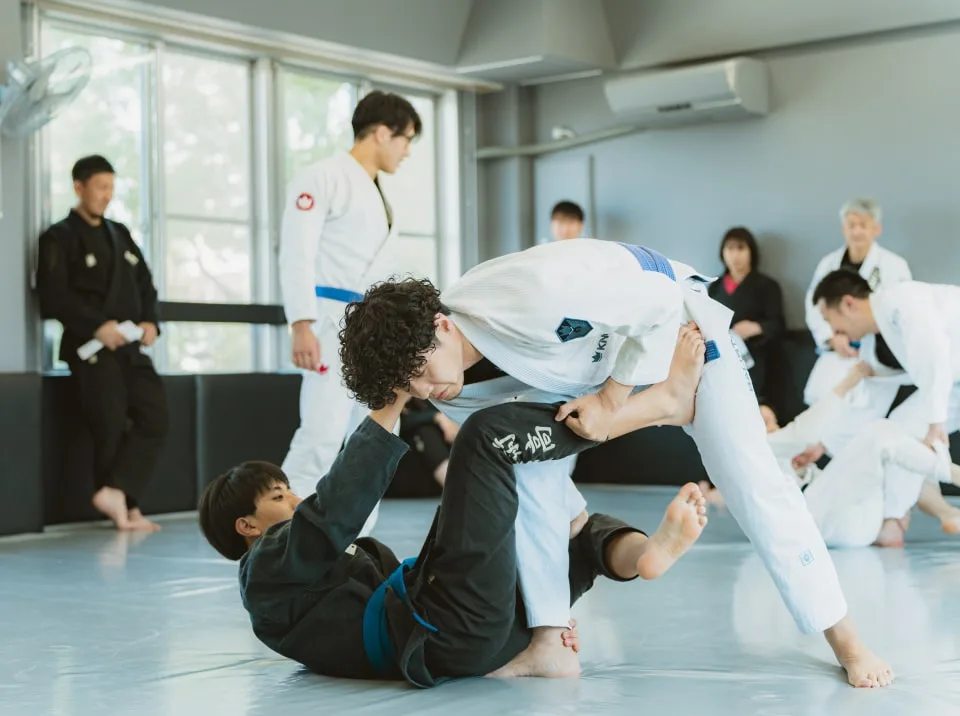
Martial arts feel good
Say you work hard and get strong. Are there really moments in daily life where that physical strength pays off? I won't say never, but not everyone lives in a violent world. Still, strength has a certain romance to it. We get fired up watching RIZIN on TV, we get excited by action stars taking down bad guys with a single fist, and even kids' anime thrills us when the hero beats the enemy with kicks and punches. I believe the root of that is an animal instinct. People want to live in peace, yet we see ourselves in characters rampaging on screen and let off stress. As long as humans are a kind of animal, it's written in our DNA. Watching a fight gets the adrenaline going. It's a physiological response.
In fact, martial arts make it easier to lose weight than a sports gym does. The reason is that martial arts release adrenaline easily, which helps burn fat. But simply getting that adrenaline going is a pleasure in itself, and martial arts fans enjoy that thrill too. That's right: martial arts feel good to do. But if you punch and kick, your bones and joints can physically break down. So striking arts, which are prone to causing trouble with age and everyday life, aren't for everyone.
Why jiu-jitsu spread
That's where Brazilian Jiu-Jitsu comes in. As explained in What Is Jiu-Jitsu?, Brazilian Jiu-Jitsu is a rather special martial art built mainly on ground fighting. Many people will say Japanese judo ground work is similar, and that's fair. But Brazilian Jiu-Jitsu, which is essentially all ground work (strictly speaking there is stand-up too), has spread across the world in just the last 30 years. It's an entirely new, cutting-edge martial art that doesn't care about your age, gender or social standing. It spread because injuries are few and you can keep at it without affecting work or school. It's also easy to start in your 30s or 40s, kind to people with no experience, and if you keep going you can feel yourself improving for good. That said, it isn't for everyone, so let me first explain who it might not suit.
You may not be suited to jiu-jitsu if...
1. You find it tedious to build things up bit by bit
Brazilian Jiu-Jitsu takes a long time to get good at. It's often said that going from white belt to black belt takes 10 years on average (the order is white, blue, purple, brown, black). It takes far longer than other martial arts because you really have to be strong to earn a Brazilian Jiu-Jitsu black belt. It's said to be harder to get than a black belt in judo or karate. Even people who are strong in other martial arts don't get strong at jiu-jitsu right away. That's because ground fighting is a martial art where you can't get anywhere without knowing the techniques and movements; quick reflexes and arm strength alone won't do it. For example, the sticky tactics of pinning someone, taking away their limbs' freedom and then submitting them can't be won on muscle and explosiveness alone. If strikes like punches and kicks were added, quick reflexes and strength might suddenly count for a lot. But strikes are banned by the rules, so you can train exclusively for ground fighting. Same as judo. If you want anything goes, that becomes MMA (mixed martial arts).
2. You want to get good at street fighting fast
As in 1, jiu-jitsu has no strikes and isn't an anything-goes martial art, so it's an inefficient choice for someone who wants to win fights. That said, in the '90s jiu-jitsu was called the strongest martial art in the world. Back then, though, jiu-jitsu included strikes (Gracie Jiu-Jitsu). In other words, it reigned as the art that was unbeatable one-on-one in the street, almost the same as today's MMA. What we call jiu-jitsu now is that art with the strikes removed and turned into a sport. As a side note, judo was also once called jiu-jitsu, and it had strikes (atemi) too.
3. You hate losing
The real thrill of jiu-jitsu is that a few minutes of sparring always produces a winner and a loser. The older we get, the less we experience clear wins and losses, because values become relative and we can no longer decide what counts as a win or a loss. But jiu-jitsu sparring is black and white, and that matters a lot. No matter how important, rich, young or old your opponent is, a win is a win. All that's there is a simple difference in who's stronger. Some people get thoroughly beaten by someone younger in sparring, feel humiliated and quit. I think those people have pride that's getting in their way. Who's stronger in jiu-jitsu comes down to technique. To close a technique gap, you just practice. So a loss is nothing but the discovery of something to work on, not a humiliation.
So jiu-jitsu suits people who like building things up bit by bit, who don't need to win street fights, and who can enjoy losing as fuel for improving. From here, I'll share lots of good things that come from sticking with jiu-jitsu. These aren't just my own opinions. They're a summary of what I've resonated with from training partners over the years, TATORU members and jiu-jitsu people around the world. If any of it speaks to you, please come to a trial class.
Jiu-jitsu shapes the way you live
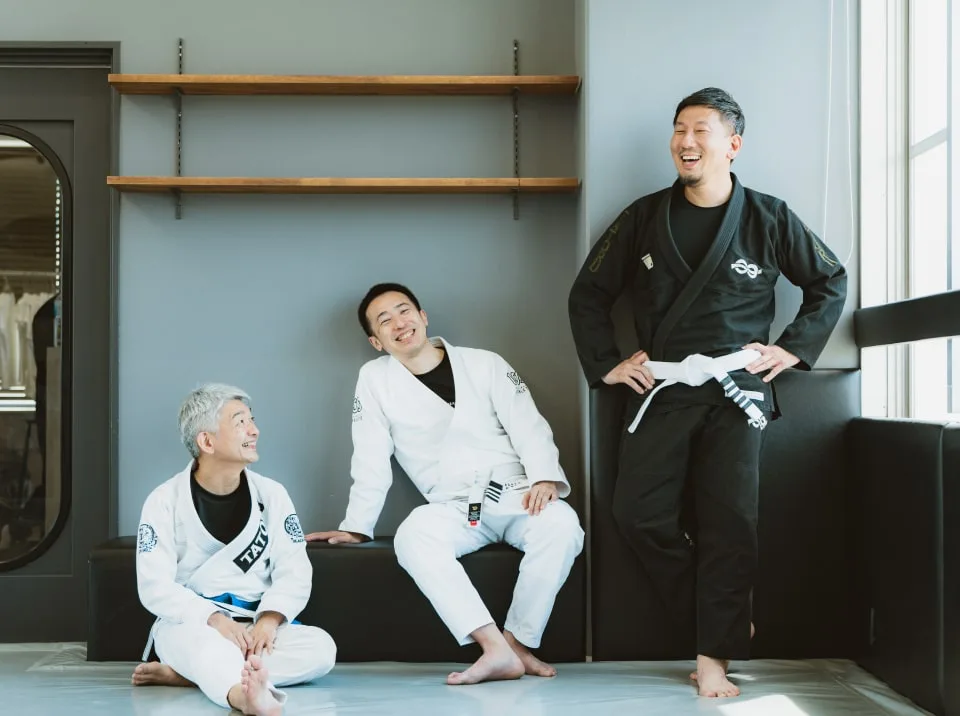
Jiu-jitsu changes your body
It may sound like an exaggeration that a mere martial art can change how you live, but jiu-jitsu has the power to change people's lives. First, your health changes. Especially if you haven't been exercising, jiu-jitsu raises your metabolism and builds muscle, and your body starts to feel lighter. I'm sure you'd get the same from a gym, yoga or tennis. But jiu-jitsu differs from those in one big way: you have training partners, so it's easier to stick with. It's not left up to you alone like a gym. The dojo is a place where your usual crowd is always there when you go. It's an indoor sport, so the weather doesn't matter. And you can only do it in pairs. That alone sets jiu-jitsu apart from other sports.
Jiu-jitsu changes your mind
Health benefits aside, jiu-jitsu also has a wonderful effect on the mind. To begin with, when your body changes, your mind changes. Negative people become positive. People with health problems live with constant pain, and that pain eats away at the heart. But when your body is in good shape, you become more upbeat and want to try new things. Like someone who has lived in the dark for years getting their light back, I've seen many people find light in life after getting healthy through jiu-jitsu.
You can start at any age
You can start jiu-jitsu at any age, and at any age you'll feel yourself improving. It's easy to adjust the intensity to your own fitness, and with no strikes, the risk of sudden injury is low. Also, a skilled person in their 50s won't lose to someone in their 20s, even if they're physically weaker. Jiu-jitsu techniques are a collection of methods for controlling an opponent efficiently. Once you've controlled them, you get a tap with a joint lock or choke. Without relying on muscle alone, you can use your opponent's strength to put them in a worse and worse position.
You come to like people
Jiu-jitsu is a contact sport between people, with zero social distance. It's about as close-contact as it gets. Some people find that off-putting or hard to handle. I understand the feeling, but it's a lot like eating insects: your view flips 180 degrees before and after. You know those people on TV who say "Ugh!" and then eat beetle grubs and gobble them up saying they're rich and creamy? It's like that. Basically, you just haven't tried it. (I've never eaten a grub myself.) When you're in close contact with other people in daily life like in jiu-jitsu, strangely the boundary between you and the other person (what Evangelion calls the AT Field) starts to melt away. The wall between hearts stops mattering. And there's nothing lovelier than that. Keep repeating it and strangers stop being strangers. Also, if you ever wrestled with someone as a kid, you'll know how a fight can suddenly make you friends. That can happen even as adults. That's the marvel of jiu-jitsu.
It gives your work some spark
If your after-5 hobby is jiu-jitsu (few people actually finish work at 5, I know), you can't wait for work to end. Even at work, I catch myself wondering which technique to practice today. I replay yesterday's sparring mistakes in my head. So does work suffer? Not at all. Thanks to the stamina you build from jiu-jitsu, your focus improves and you finish work in less time. Your positive mindset also makes coworkers like you. Positive people are popular. And with good relationships, work naturally gets more fulfilling. Starting jiu-jitsu to improve relationships at work is also a fine idea. Just telling people at work you do jiu-jitsu makes them quietly think, "Better not make that guy angry."
You build the habit of building up
Jiu-jitsu is a collection of basic movements used almost nowhere else, and that collection is what we call a technique. So until you've drilled unfamiliar movements like shrimping and burpees into your body and can reproduce them instantly, you can't learn techniques. When you start, you won't be able to do them and you'll be confused. But as you repeat them over and over, you begin to move automatically. Eventually you see that even complicated techniques are collections of simple movements, and you reproduce them faster. That's what it means to be able to do a technique. Actually, this isn't unique to jiu-jitsu. English and math work the same way. Once you understand the meaning of building up through jiu-jitsu, you'll gain the habit of tackling hard things patiently in everyday life too.
You come to like yourself
What people who've done jiu-jitsu for a long time have in common is this mindset: if you moved even one step ahead of yesterday's you, you can take that as fuel and do it again tomorrow. The mindset of people who don't last is the opposite: comparing themselves with others and getting discouraged. We come to like ourselves by piling up successes. Little by little you evolve, and when you find you've become stronger, you gain confidence. That kind of self-esteem is needed at any age. What matters most is that you yourself approve of yourself.
You learn to respect others
Respecting someone who's better than you at the same path is something we tend to forget in daily life. Once jiu-jitsu captivates you, you can respect people who are better at it than you, even if they're younger. That feeling does a lot for your character. Respecting someone, or being respected, brings out pure feelings in people. Fewer grudges and less envy is another good effect of jiu-jitsu.
You come to love your hometown
TATORU has men and women of all ages and professions. In particular, the share of women is far higher than at any other martial arts dojo. Through the dojo you get to know people from all walks of life you wouldn't normally meet. Conversation with no strings attached is wonderfully easy. The only shared value is jiu-jitsu. Jiu-jitsu is the common language.
You learn by losing
There's a jiu-jitsu saying: "Win or learn." In jiu-jitsu matches and sparring, there's always a result within the time limit. The winner knows exactly why they won: the opponent made a mistake. But when you lose, you often don't know why for a while. Usually the other person was simply better, but analyzing it is the fun part. Ah, I made that mistake there. So how do I fix it? That's when you start thinking. And usually there's a way to beat it. In that sense, it's also a great fit for people who love games like PlayStation or Nintendo Switch. Jiu-jitsu is very game-like. Practicing in secret to outsmart your opponent is fun too. Not falling for the same trick twice. Setting a trap for them in return. Enjoying that kind of game is part of the thrill. Seen that way, losing is actually lucky, because it exposes your weaknesses.
Food tastes different
It goes without saying that a meal after a good sweat is incredibly delicious. Even when you reach the age where appetite fades, food after adrenaline and sweat is truly tasty. Tasty food gives you a sense of being fully alive, the simplest sense of living there is. You savor your health and carry on with the cycle of daily life.
You can control your body the way you want
How much can a person control their own body from birth to death? Moving your body just as you intend is an enormous pleasure. The body mechanics of jiu-jitsu are very mechanical, and if you keep at it for years, you start to feel every law of physics in daily life and move more efficiently. That naturally reduces injuries and makes it harder to hurt your body. Everyday movements like lifting things and opening doors keep getting refined as you absorb jiu-jitsu movement. And feeling your nerves' commands reach every corner of your body is a tremendous pleasure.
You learn to be grateful for good health
Being able to move without any trouble in the first place is already a happy thing. Hearing that, many people probably don't feel it. But once you do jiu-jitsu, you learn to be thankful that you can enjoy something this fun because your parents gave you a body with working arms and legs. That said, you can do jiu-jitsu even without a fully able body, so don't worry. Still, jiu-jitsu lets you enjoy using your body to the fullest, enough to make you aware of how precious that is. And eventually you realize it isn't forever, because we all grow old. Feeling that natural order is what makes you want to live in the present.
You can face aging
Even if it's a martial art you can do at any age, a fresh young person may pass you in no time. It reminds me of the old samurai drama theme song: "Those who came later have already overtaken me..." But you come to see that this too is wonderful. That young person will also grow old and one day feel what you feel. This is the fate of life. At a dojo you glimpse that cycle of being alive. I think it's a real experience you can't get in today's virtual world. It's a perfect chance to face your own life.
You can play with your kids longer
Once you have kids, you know they have far more energy. Meanwhile your own stamina fades year by year. If you've been training your body with jiu-jitsu, you can play with your kids longer. If you play a lot, your kids will keep loving you. You can also do jiu-jitsu as parent and child. At TATORU, several parent-child pairs train together, and the sight is truly lovely. They study techniques together. Opportunities for parent-child time like that are getting rarer every year. Training together regularly lets you feel your child growing and communicate beyond words, so I highly recommend it.
You learn to sense danger
Jiu-jitsu is, at its root, self-defense. You may think self-defense means dodging an attacker's blows, but that's not all. Your ability to sense the danger hidden in daily life improves dramatically, especially your powers of observation. For example, taking a detour when a suspicious car is parked in your neighborhood is also self-defense. You start anticipating that something might jump out from around a corner. And if it does, a simulation of how to dodge it runs instantly in your head. That means a much better chance of survival than people who don't do jiu-jitsu. Parents in particular have a better chance of saving their child in a crisis, so you should do jiu-jitsu to protect not only yourself but your family. It also helps with dangerous people. For example, when someone blocks the road while tailgating you, you know not to roll down your window carelessly. In situations where complacency could cost you your life, jiu-jitsu lets you make the best call. Also, when you train your body, people simply stop pushing you around. It may sound ridiculous, but people who pick fights on the street are usually sizing up your fighting power with their mental scouter. Those hyenas pick up on a body trained by jiu-jitsu right away. Hyenas who normally live in violence are constantly measuring how strong you are. That said, the real self-defense is not going near such places in the first place. Jiu-jitsu is useful even for that animal side of humans.
Your heart becomes more generous
As you get stronger at jiu-jitsu, you can sense and avoid danger, and at the same time you realize you could take someone down whenever you wanted, and a sense of compassion grows. You could, but you don't. That gives your heart room to breathe. Even the nosiest boss, if you picture yourself putting a rear naked choke on them in your head, you can listen to the lecture with a smile. And you gain the composure to protect those who are weaker. As a result, you gain character and become someone people look up to.
Don't like weight training? That's fine
Some people lift weights to get stronger at jiu-jitsu, but not every strong person does. There are plenty of world-class fighters who don't lift. The reason is that the techniques are thoroughly designed around efficient movement. Maximum effect with minimum force. Jiu-jitsu weaves in movements based on all kinds of leverage principles. Master them and you can become a master who looks wiry but is strong in a fight. Even if you're bad at weight training, you can get good at jiu-jitsu.
Perfect for preventing lifestyle diseases
It's obvious, but exercise is the most effective way to prevent lifestyle diseases. Yet it's the most effective and also the highest hurdle, so everyone ends up short on exercise. Why? Because exercise isn't fun. With jiu-jitsu, as written above, you improve while the adrenaline is flowing. Of course it won't suit everyone, but many people who say "I've never stuck with any exercise" get hooked on jiu-jitsu alone. And their health checkup numbers show astonishing recovery. No wonder: you get a full-body workout and stress relief at once, and you start paying attention to what you eat.
You can start with a light heart
I want you to start jiu-jitsu with a light heart. In fact, people who started casually are the ones who last. People who rev up saying "I'm going to get strong! I'm going to be champion!" tend to quit surprisingly fast. On the other hand, people who show up with a "I was bored, so here I am" attitude often find they've been at it for 5 or 10 years. Anyway, starting something new with an empty mind matters. In life, closing your eyes and jumping in can open up a new world. Jiu-jitsu is worth it.
Why TATORU
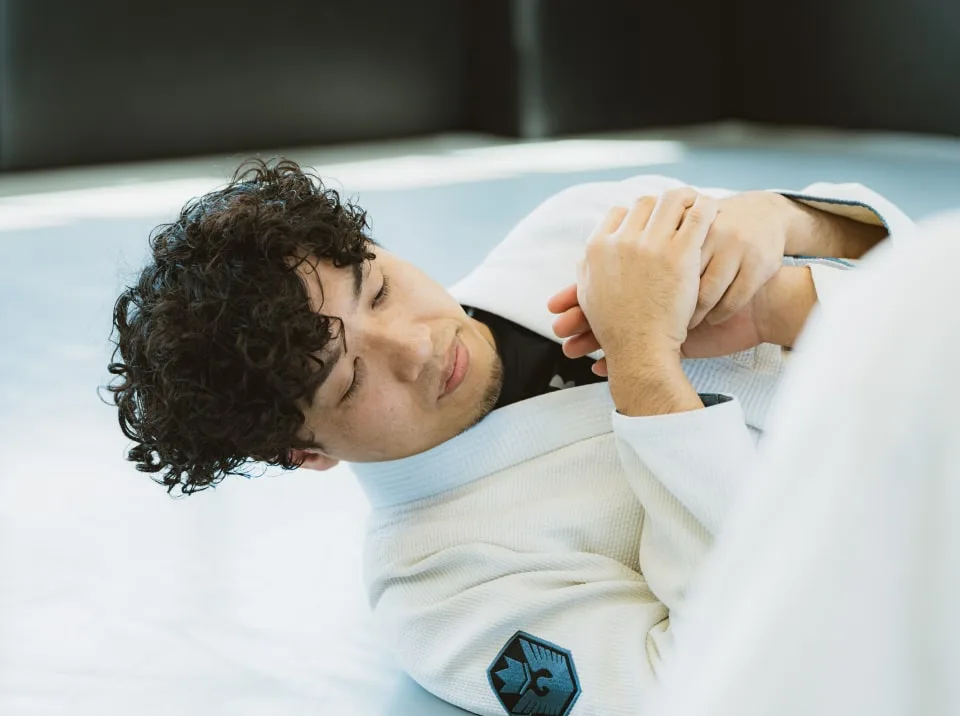
TATORU's management works with no compromises every day to seriously spread the culture of jiu-jitsu in Kumamoto. Each year more members get behind that effort. We are now the largest jiu-jitsu-only dojo in Kyushu, even in western Japan, and I feel it's because the wonder of jiu-jitsu is gradually getting through. At TATORU, we want everyone who starts to keep going, so every day we work to give you a comfortable place and more than your fees are worth. From here, I'll explain what makes TATORU special.
A Social Space for Adults, a Third Place
After reading the above, I hope it's clear that a jiu-jitsu dojo isn't just a place to build your body. Many people come to TATORU because they enjoy seeing people, or because it lets them build relationships outside of work and home. Going where people are brings peace of mind. In Kumamoto, which has seen many disasters in the last 10 years, a place where people gather is very precious. Go to TATORU and you'll see familiar faces. It's perfect for stepping out of a small community and forming new relationships. As long as you have basic manners, anyone can join.
Even if you get bored easily, you'll stick with it
There are so many jiu-jitsu techniques that you couldn't learn them all in a lifetime. Worldwide, fight-style trends change every 10 years. All kinds of masters present systematized collections of techniques called "concepts." Jiu-jitsu players choose the ones they like from those concepts, and in that way design their own jiu-jitsu. So even in the same jiu-jitsu, each person uses different concepts. In sparring, you read your opponent's concept and think how to beat it, or sharpen your own. Once you're hooked on that fun, it's over: you'll never get bored. The catch is that many people quit before they get hooked. TATORU lets you thoroughly learn the basics until you do.
Lots of Classes
The number of classes at TATORU is unreal. We're open every day, with 30 classes a week. I, owner Takagame, am there almost every day of the year. The only times I'm not are when I'm abroad studying cutting-edge jiu-jitsu or cheering at a competition. Classes are properly divided by level, so beginners won't be left behind and can train with peace of mind. We're open from morning to night, so you can train before work, after work, or any free moment. Jiu-jitsu junkies want to go to a dojo that's open as often as possible. You finally fall in love with a martial art, and if it's only offered once a week, that's no fun.
Unlimited Classes, One Flat Fee
Some people may think a monthly fee of ¥16,500 (full-time, general members) is high for the countryside, but given the number of classes, it's a bargain. Few jiu-jitsu-only dojos in Japan offer this many classes. TATORU is set up to be a great deal for people who train a lot.
Easy for Women to Start
TATORU has a huge number of women members. 25% of our members are women. Of course, we keep the women's fee low at ¥13,200 (full-time), but we also have a female instructor and plenty of women members already, so you'll never feel out of place. I'd like to explain why jiu-jitsu is easy for women to start, but I can't put it well... One thing I can say is that women who get hooked on jiu-jitsu tend to be shrewd. I think they get hooked once they realize jiu-jitsu is a martial art you can win by thinking.
Come With Nothing
Gis are bulky, and if you don't want to carry one to work, our rental gi set is just ¥1,100 (tax included). Sweat it out at jiu-jitsu with nothing in your hands, take a shower and head home. Come the way you'd stop by a bathhouse.
We Explain Things Properly
At TATORU, we teach the mechanics of each technique in class. We don't do that mysterious "watch and learn if you want to get strong" style of coaching. Of course jiu-jitsu techniques are hard to understand at first, but they share a lot in common, and as you keep thinking "I've seen this movement before," your body gradually starts to move. Eventually you can "speak" jiu-jitsu, the way you learn to speak a language. Studying techniques isn't just for staff; most members do it every day, and these days, thanks to video culture, there's no gap in information about jiu-jitsu techniques. So all that's left is to try things out at the dojo. In fact, I got strong by watching all kinds of instructional videos, and I still watch them today.
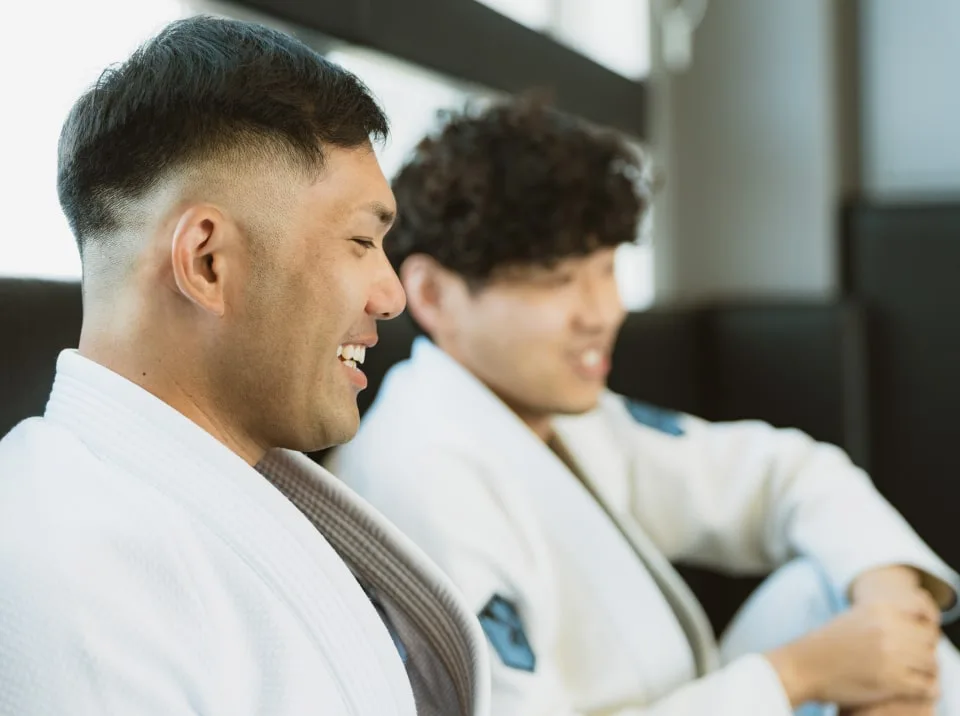
That's the appeal of jiu-jitsu and of TATORU. Thank you for reading a piece longer than you'll find on any other martial arts dojo's site. If even one thing caught your interest, I think it's worth giving it a try. See you at the dojo!
TATORU Owner Yosuke Takagame